
Why identical blasts get ignored
If your SMS programme is a contact list and a send button, you already know the shape of the problem. The same text goes to everyone, it goes out when it suits your calendar rather than theirs, and the handful of people who do reply wait for someone on your side to notice. Opt-outs creep up, and the channel starts to feel tapped out. It is not that SMS stopped working, it is that nothing on the other end of the send was ever built to hold a conversation.
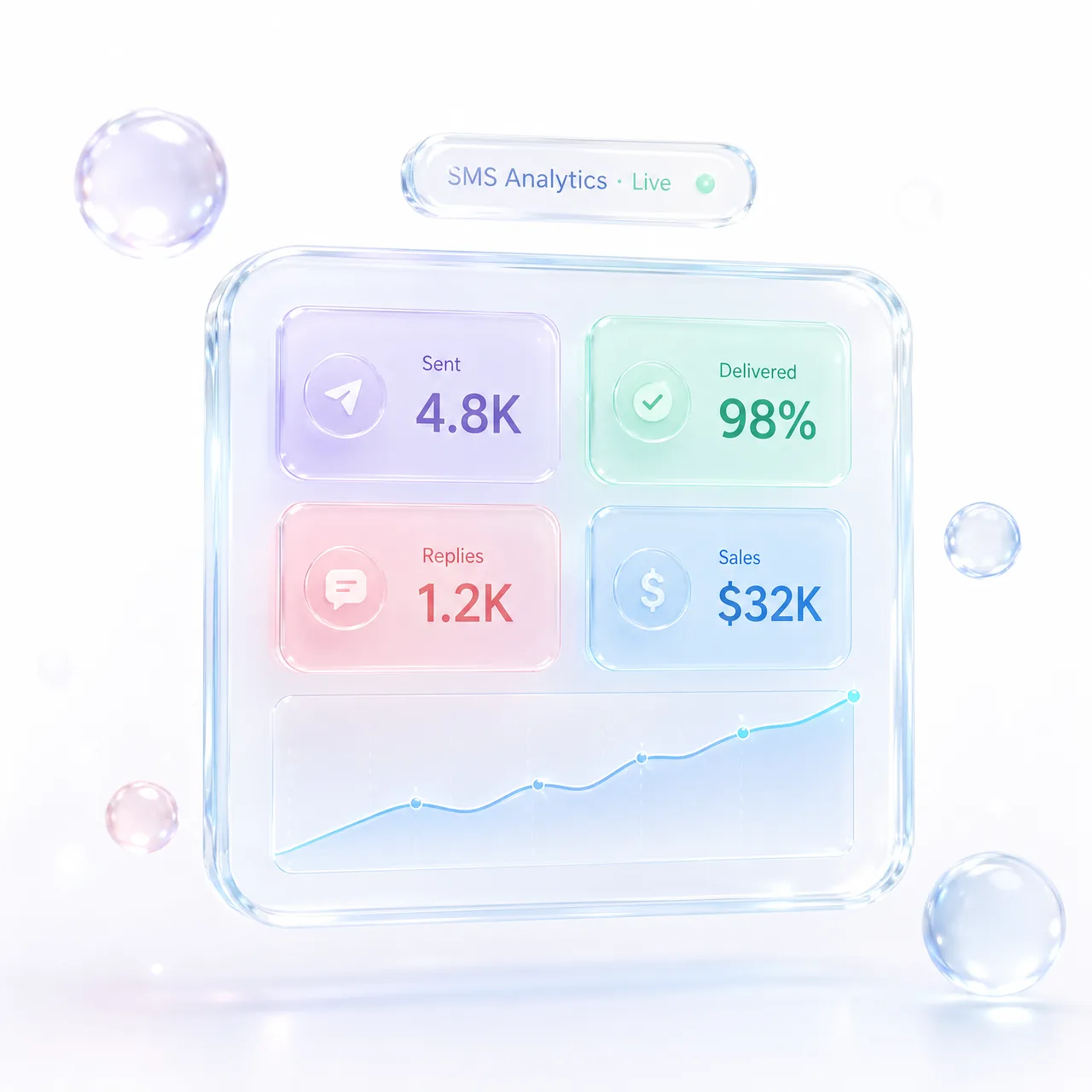
One AI SMS agent, tied to your CRM
Replace the blast with a MyChatBot SMS agent connected to your CRM, whether that is KeyCRM, SalesDrive, Bitrix24, Kommo, HubSpot or another, and put the offer in a Product Feed or Product Spreadsheet so the agent can talk about real items, prices and availability. From there each text is written for the person receiving it and timed against their behaviour rather than your send schedule, and every reply gets an instant two-way answer in the same thread. Each conversation is tracked as a lead: create_crm_lead opens the record, edit_crm_lead keeps it current, and lead_chat_link puts the full transcript one click from the card, with the source marked "AI-" so you can see what the channel is actually producing. No more one-way shouting.
Turning replies into pipeline
Once texting is two-way, the useful work starts on the inbound side. The agent answers catalogue questions from the Knowledge Base, reaching for Agentic Search across your Business Domain docs when the answer is not in the feed. It qualifies intent, then either takes the order through create_order on a Google Spreadsheet or books the slot in Google Calendar after checking what is genuinely free. Anyone who goes quiet is picked up by Follow-ups, spaced out rather than repeating the same message, and opt-outs are respected the moment they arrive. Labels & Statuses in Lead Processing keep the list sorted, so what you read at the end of the week is tracked, qualified pipeline instead of a delivery report.
Where humans step in
Hot and tricky conversations go to people. Hand-off Control routes them to your team via Flight Control in Telegram, with silent hand-off so the customer sees one smooth thread. The agent carries the volume; your team closes the deals that need a human.
What changes in practice
The point is not to text more, it is to send texts that are worth answering. Because the agent writes for one person, arrives when that person is likely to look, and can carry the conversation that follows, a reply stops being an accident you are not staffed for. Because everything sits in one CRM, you can trace a send to a conversation to a deal rather than guessing at it.
To set it up: connect the SMS channel, point the agent at your CRM and your Product Feed, assemble the instruction in the Configuration Wizard and battle-test it before it goes live, set the Agent On/Off schedule so nothing sends at an antisocial hour, then switch on Follow-ups and Hand-off Control. Start with a single segment, read the transcripts it produces, and adjust the instruction from what people actually write back.
A real customer story on this: Subscription churn cut by 28% with proactive outreach.