
The /menu problem
Most Telegram bots are decision trees in disguise. Tap /start, get a wall of buttons, pick the wrong branch, and you are stuck, there is no button for what you actually wanted. People feel the rigidity instantly, and the 2% that push through are the only ones who convert. The brands hitting 18% replaced the menu with an agent that just understands what you typed.
Sounding human on Telegram is not about emojis. It is about answering the real question, the first time, without forcing anyone down a script.
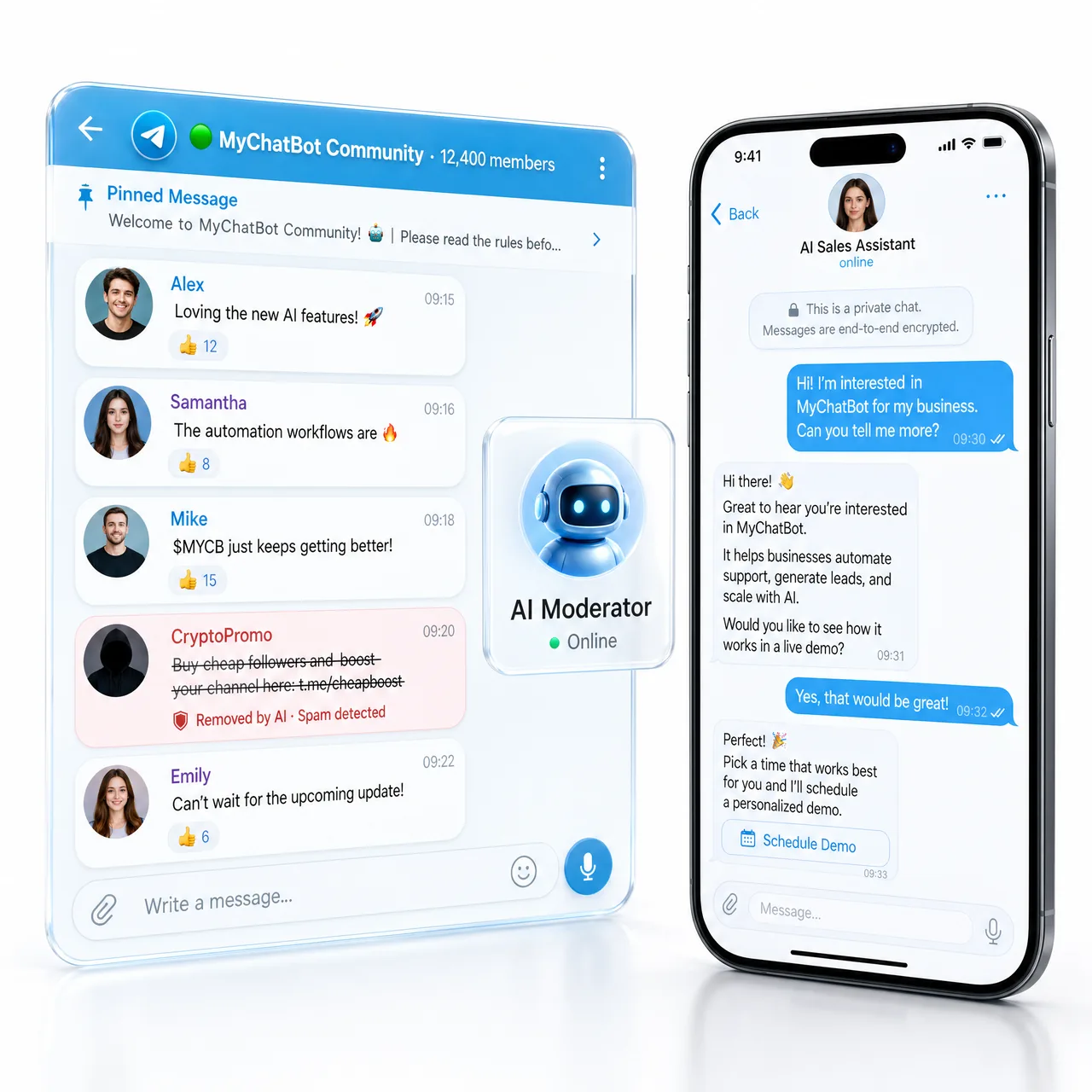
What a Telegram agent actually does
A MyChatBot agent reads free-text messages, understands intent, and answers from your Knowledge Base, no rigid branches. It still supports /commands and inline buttons where they help, but when someone types "do you have this in blue, and how fast can you ship?" it just answers, checking the Product Feed and your shipping policy in one reply.
The features that make it feel native
Agentic Search pulls the one relevant answer instead of dumping a catalogue. CRM tools, create_crm_lead, create_crm_deal, add_crm_client_contact, fire on intent with a lead_chat_link. Reply Format sends real images instead of raw links and can break long answers into natural messages, so the bot reads like a person, not a payload.
Knowing when to hand off
Sounding human means knowing when to stop. Hand-off Control routes edge cases, a complaint, a custom quote, a stop-word, to a person, with silent hand-off so the user feels no seam and Flight Control pinging your team in Telegram itself. The agent runs the repetitive 80%; people take the 20% that needs a human.
How to set it up
Connect your Telegram bot, load Business Domain docs and a Product Feed, wire your CRM, and define the hand-off rules. Let the Configuration Wizard battle-test the instruction, set an Agent On schedule, and go live. The result is a bot people actually want to talk to, one that answers, sells and routes without a single dead-end menu.