
The gap between views and replies
If your TikTok content works, the bottleneck simply moves. A video that takes off brings a wave of "price?" DMs overnight, and a small team can only reach a fraction of them before the trend cools. You end up manufacturing demand and then watching it leak away, not because the offer is wrong, but because nobody is awake when the comment section peaks.
The worst part is that this failure is invisible in your analytics. Views, saves and shares all look healthy. What you never see is the person who asked a question, waited a day, and bought somewhere else.
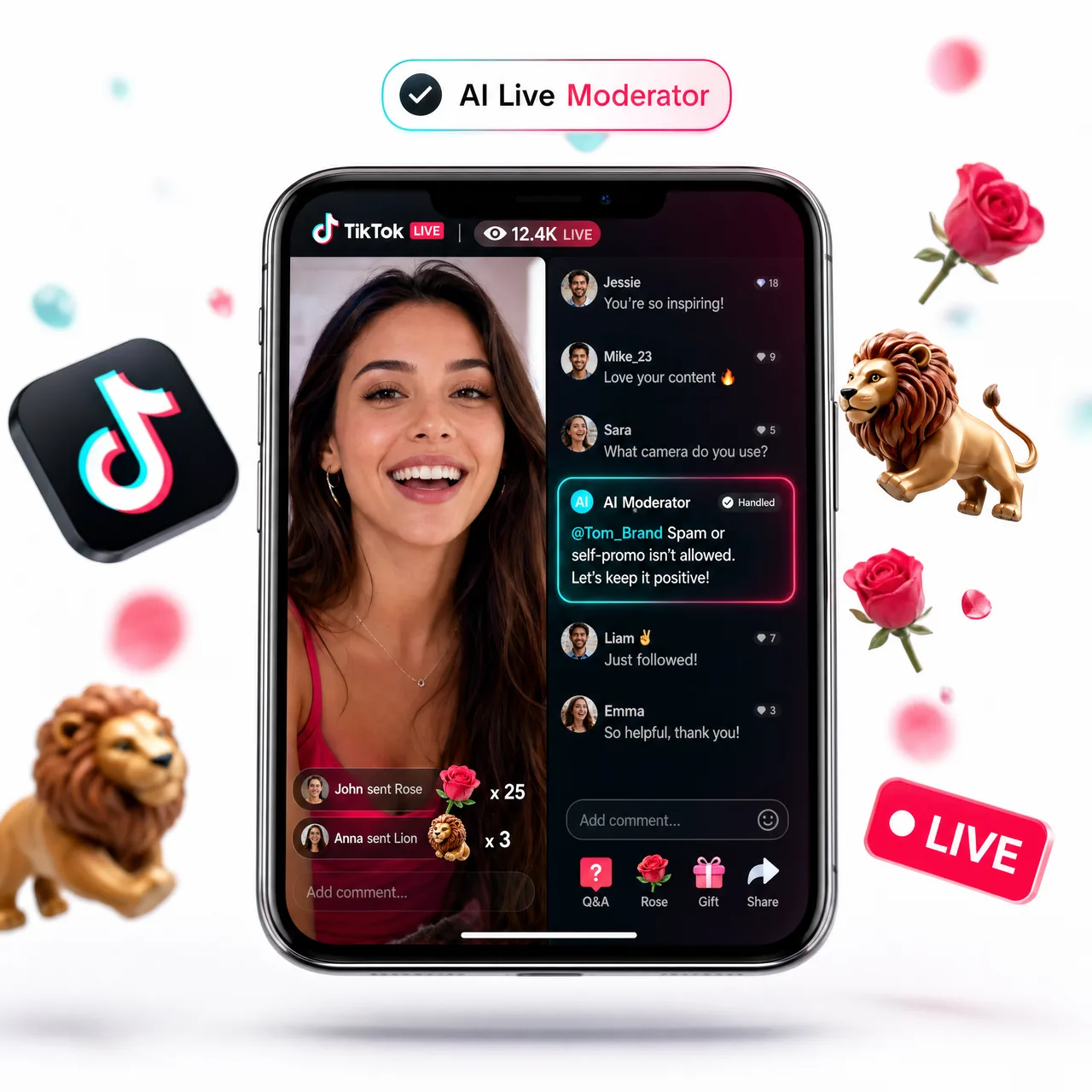
Start with one agent on your main account
Put one MyChatBot sales agent on your flagship TikTok before you touch anything else. Load your range as a Product Spreadsheet and your store details, hours, addresses, policies, what is stocked where, into Business Domain docs, so the agent quotes real prices and real availability instead of improvising.
From there it answers DMs and comments the moment they arrive, sends the right product image (Reply Format turns an image link into the image itself, and splits long answers into readable paragraphs), and books in-store visits straight into Google Calendar after checking which slots are actually free. In a beauty or wellness business you can point it at Altegio instead and let it write into the booking system your front desk already uses. Build the instruction in the Configuration Wizard and battle-test it against your own worst DMs before it goes live.
Extend it across your location accounts
Once the flagship account behaves the way you want, clone the agent to each location account. Every clone keeps its own calendar and its own pricing, and all of them feed one CRM, whether you run KeyCRM, SalesDrive, Bitrix24, Kommo, HubSpot or Salesforce.
create_crm_lead turns an interested DM into a tracked lead, lead_chat_link keeps a link back to the conversation it came from, and a source marked AI- lets you separate agent-sourced demand from the rest. That is what makes it possible to see which videos drive bookings location by location, rather than guessing from view counts. Follow-ups pick up the threads that stall, the ones who asked about price and went quiet, and Labels & Statuses in Lead Processing keep the pipeline readable once several accounts are running at once.
Where your team steps in
The point is to free your team, not to replace it. Hand-off Control routes complex requests, allergies, custom bundles, complaints, to staff via Flight Control in Telegram, with silent hand-off so the customer never notices a switch.
Set a stop word so anyone can pull a human into the thread on demand, and use Agent On/Off with a schedule if you only want the agent covering the hours your team cannot. The agent takes the spike; your people take the nuance.
What changes in practice
What changes is capacity, not content. Every spike gets an answer instead of the share your team could physically reach. First reply happens when the message lands rather than whenever the queue clears. Each location reports into one pipeline instead of a dozen separate inboxes. And your content team can finally connect a video to a booking rather than to a view count.
To set it up: connect TikTok, load the Product Spreadsheet and Business Domain docs, assemble and battle-test the instruction in the Configuration Wizard, connect your CRM and Google Calendar or Altegio, configure Hand-off Control and Flight Control, then switch Follow-ups on. Virality is only worth as much as your ability to answer it.
A real customer story on this: DMs and comments answered in seconds across 4 networks.