
The uncanny-valley phone call
Everyone has hung up on a robocall within three seconds. The tells are obvious: a half-second delay before every reply, a flat read-from-script tone, no ability to handle an interruption. The brands turning 2% funnels into 18% ones do not make robocalls, they make calls that feel like a competent person who happens to be available 24/7.
On voice, the bar is brutal because humans judge a voice in milliseconds. Getting it right is about latency, tone and knowing when to pass to a human.
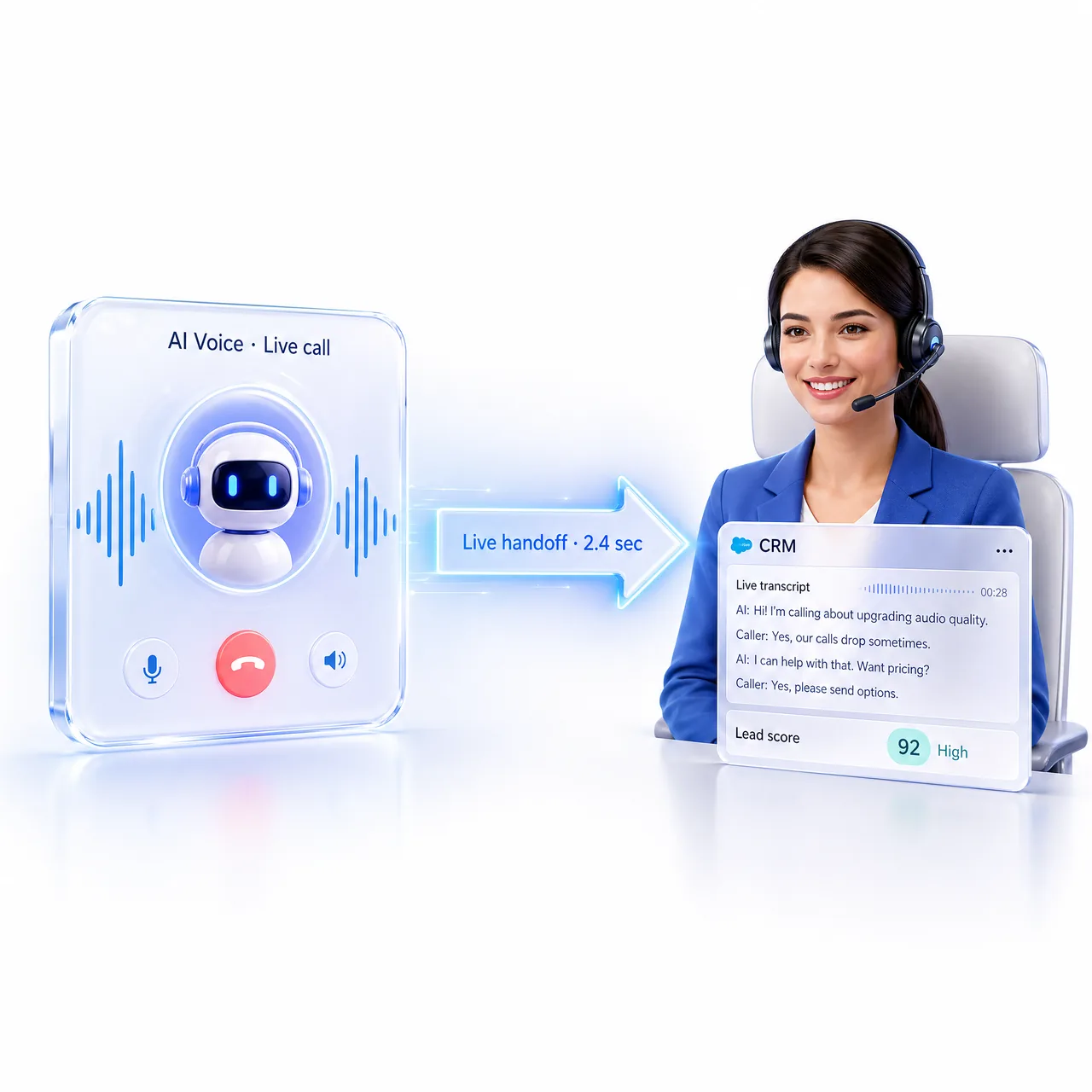
What an AI voice agent actually does
A MyChatBot voice agent, built on the Calls SDK, answers and places calls, understands speech in real time, and responds in a natural voice from your Knowledge Base. It qualifies a lead, confirms an appointment, answers the common questions, and books into Google Calendar, handling interruptions and tangents the way a real rep would.
The features that kill the robot feeling
Low latency is everything, the Calls SDK keeps replies fast enough to feel conversational. Barge-in lets the caller interrupt without breaking the flow. Agentic Search grounds answers in your real data instead of a rigid script. And CRM tools, create_crm_lead, create_crm_deal, log every call as a tracked record with a chat link, so a phone call becomes real pipeline.
Knowing when to transfer
Sounding human means handing off like one. Hand-off Control transfers the call, or flags a callback, the moment it hits a complaint, a complex negotiation or a stop-phrase, with Flight Control alerting your team in Telegram. The agent handles the high-volume routine; people take the calls that need a human ear.
How to set it up
Connect AI Voice via the MyChatBot Calls SDK, load Business Domain docs and a Product Feed, wire your CRM and calendar, and define the transfer rules. Let the Configuration Wizard battle-test the script, set an Agent On schedule, and go live. The result is a phone line that answers every call instantly, books and qualifies, and never sounds like a robot reading a card.